
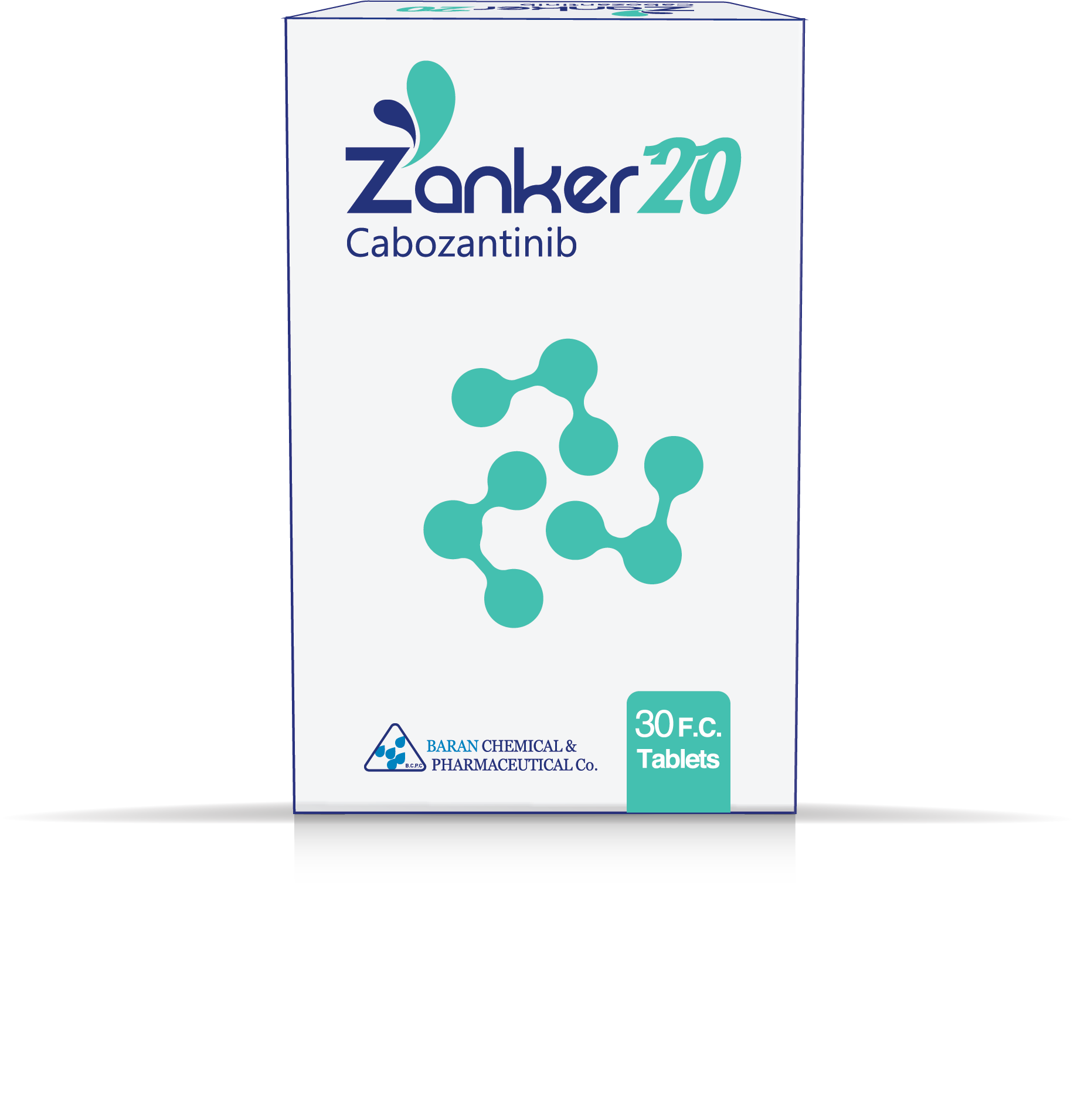
About this medicine
Product information is provided to support understanding and conversations with your care team. Follow the approved leaflet and your prescriber’s instructions.
Content migrated from the company website; pending clinical review before final publication.
Dosage forms
Oral tablets (20, 40 and 60 mg)
Drug class
Multikinase tyrosine kinase inhibitor and vascular endothelial growth factor (VEGF) inhibitor
Administration
Take once daily, at least one hour before or two hours after food. Taking the medicine on an empty stomach helps reduce gastrointestinal adverse effects.
Uses
• Renal cell carcinoma (RCC): first-line combination treatment with nivolumab in patients with advanced RCC
• Second-line treatment when disease progresses after VEGFR-targeted treatment or immunotherapy
• Medullary thyroid cancer (MTC): unresectable or metastatic disease
• Differentiated thyroid cancer (DTC): advanced or metastatic disease
• Hepatocellular carcinoma (HCC): disease progression after sorafenib or other first-line medicines
Competitive advantages
As a multikinase tyrosine kinase inhibitor, cabozantinib has shown strong activity in controlling tumors resistant to conventional treatments. Through inhibition of MET and AXL pathways, it not only suppresses tumor growth but also prevents angiogenesis and metastasis.
In clinical studies, cabozantinib has substantially improved progression-free survival (PFS) in patients with renal cell carcinoma and medullary thyroid cancer, particularly those with advanced tumors that other medicines can no longer control.
These advantages make cabozantinib a preferred choice for specialists worldwide who seek an effective and sustained approach to resistant cancers.
Original company product page ↗