About this medicine
Product information is provided to support understanding and conversations with your care team. Follow the approved leaflet and your prescriber’s instructions.
Content migrated from the company website; pending clinical review before final publication.
Dosage forms
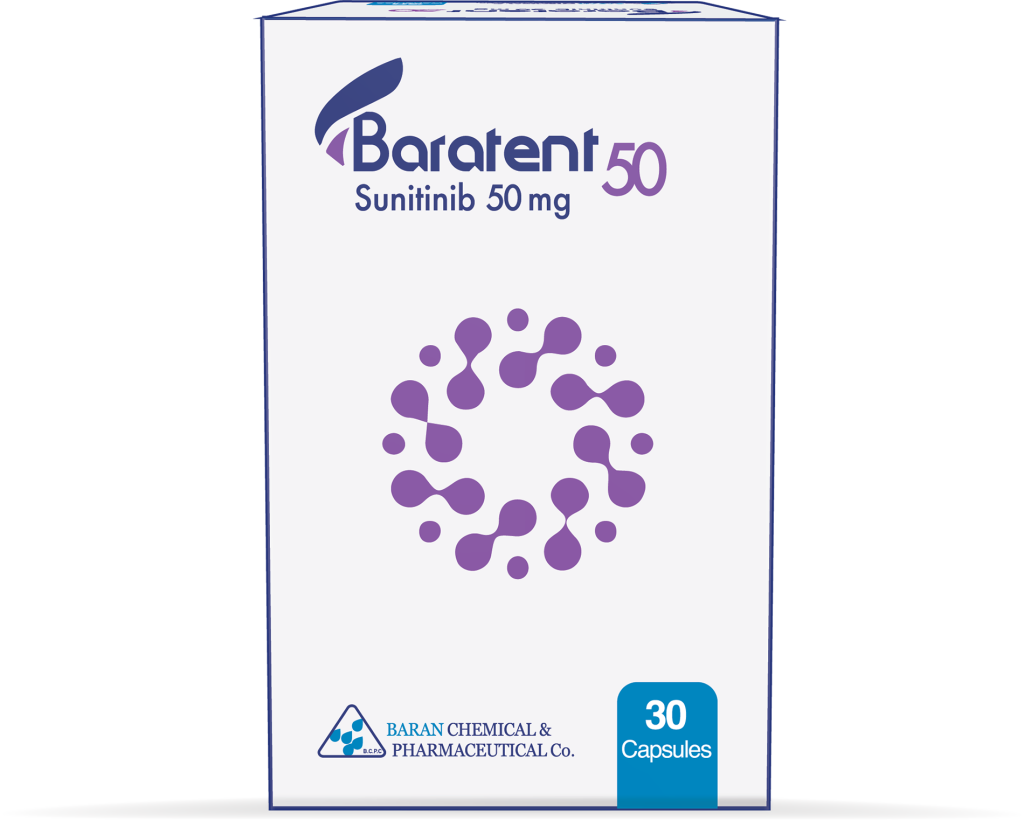
Oral capsules (25 and 50 mg)
Drug class
Multikinase tyrosine kinase inhibitor and vascular endothelial growth factor (VEGF) inhibitor
Administration
The dose varies according to the disease. Some uses require continuous daily dosing, while others involve six-week treatment cycles (four weeks of treatment followed by two weeks off). It may be taken with or without food.
Uses
• Renal cell carcinoma (RCC): first-line treatment of advanced or metastatic RCC
• Gastrointestinal stromal tumor (GIST): second-line treatment in patients resistant to or unable to tolerate imatinib
• Advanced pancreatic neuroendocrine tumors
Competitive advantages
As a multikinase tyrosine kinase inhibitor, particularly through inhibition of vascular endothelial growth factor (VEGF) and other important pathways, sunitinib is effective in the treatment of advanced cancers such as RCC, GIST and pancreatic neuroendocrine tumors.
Its ability to inhibit multiple pathways involved in cancer-cell growth and proliferation has made it a main choice for patients resistant to previous treatments. With positive clinical outcomes in disease control and survival, sunitinib has an important role in treating advanced cancers.
Original company product page ↗